Blog

Retatrutide vs Tirzepatide vs Semaglutide in 2026: Receptors, Evidence and Trial Maturity
A current 2026 comparison of retatrutide, tirzepatide and semaglutide focused on receptor biology, evidence maturity, trial design and the limits of cross-trial comparisons.
Retatrutide Research in 2026: Understanding GIP, GLP-1 and Glucagon Triple Agonism
A research-focused guide to retatrutide, its three receptor targets, current 2026 evidence and the distinction between published clinical research and laboratory research material.
GHK-Cu Research Guide: Copper Binding, Molecular Identity and Laboratory Research
GHK-Cu is a copper-binding tripeptide system whose research interpretation depends on molecular identity, coordination state and formulation context.
Is GLP-3 a Real Receptor? Understanding the “GLP-3” Name Used for Retatrutide
The phrase GLP-3 appears frequently around retatrutide, but the scientific receptor description is GIP, GLP-1 and glucagon receptor agonism.
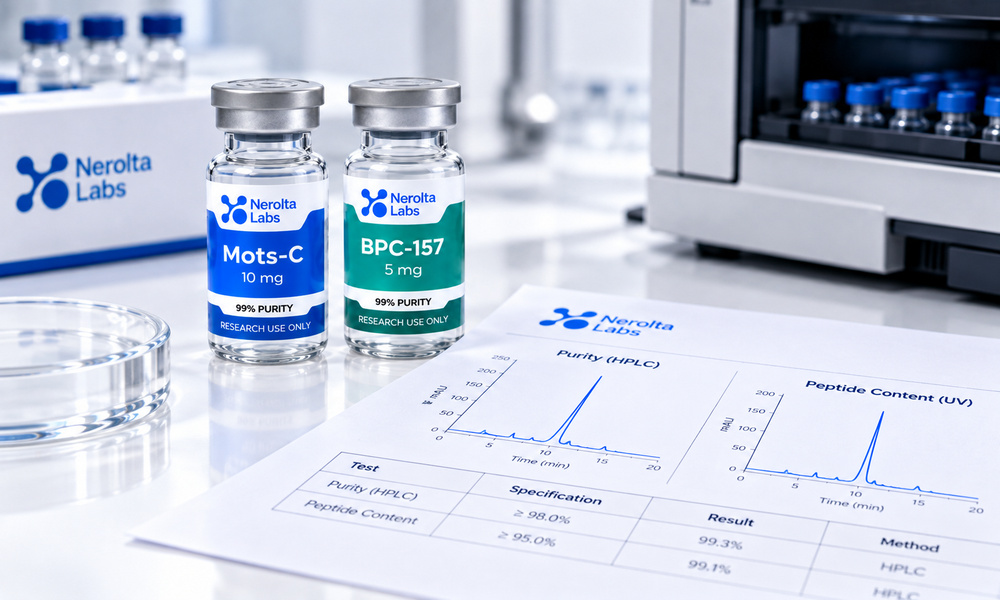
Peptide Purity vs Peptide Content: Why 99% HPLC Purity Does Not Mean 99% Peptide by Weight
A 99% HPLC purity result describes chromatographic composition under a method; it does not automatically mean 99% of the vial mass is target peptide.
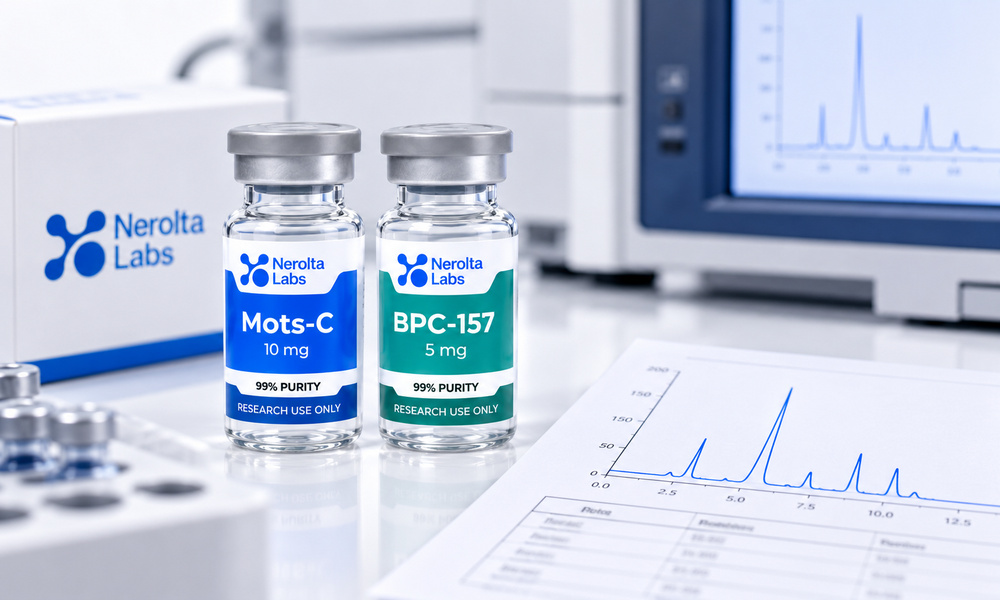
HPLC vs LC-MS for Research Peptides: Purity, Identity and What Each Test Actually Shows
HPLC and LC-MS are often placed side by side on peptide COAs, but they answer different analytical questions. Here is how to read them.
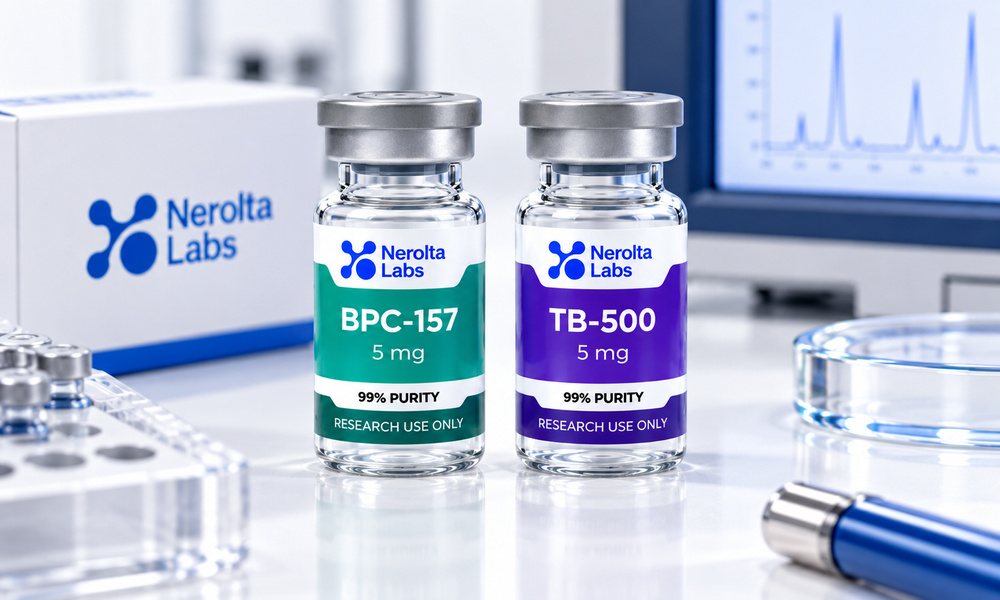
BPC-157 vs TB-500 in Preclinical Research: Two Different Molecules, Two Different Evidence Bases
BPC-157 and TB-500 are frequently grouped together commercially, but they are different molecules with different research histories and evidence bases.
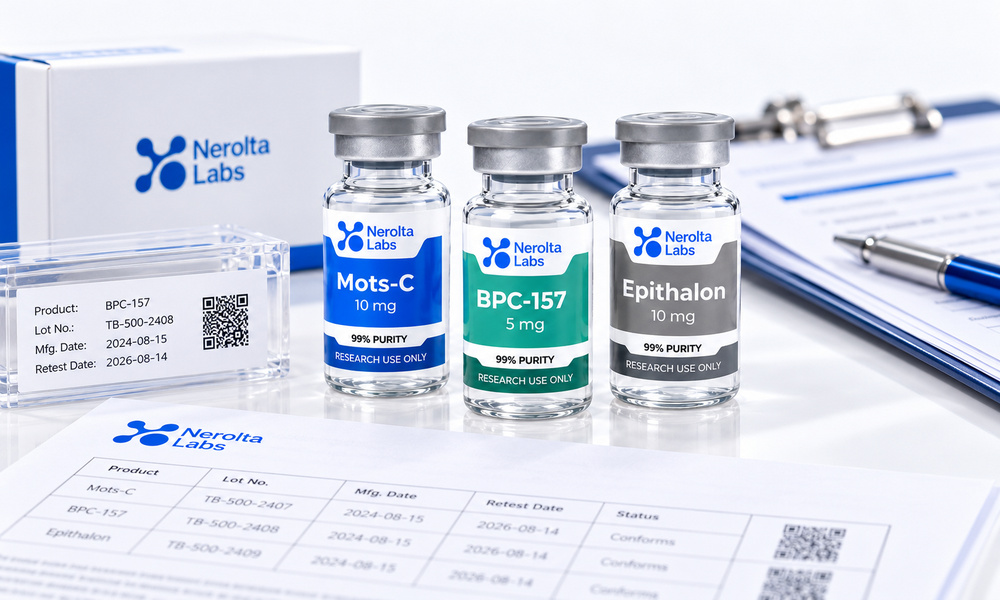
Peptide Lot Numbers and Batch Traceability: How Researchers Verify What Is in a Vial
A COA is useful only when a laboratory can connect it to the material in hand. Lot numbers create that traceability chain.
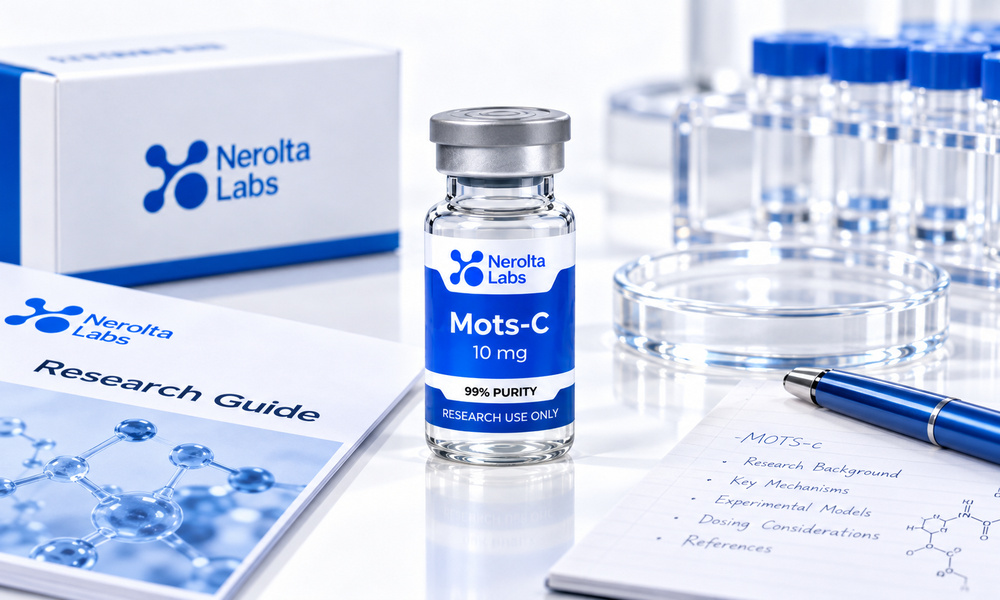
MOTS-c Research Guide: A Mitochondrial-Derived Peptide and Cellular Stress Signaling
MOTS-c is a 16-amino-acid mitochondrial-derived peptide encoded within the 12S rRNA region and studied as a signal connecting mitochondrial stress with nuclear responses.
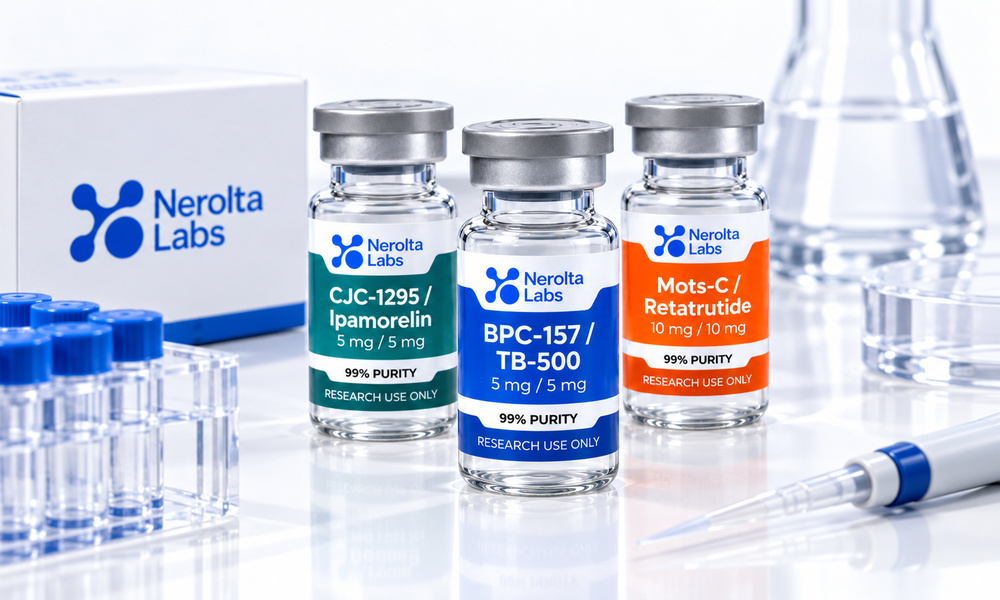
Peptide Blends in Laboratory Research: Why Individual Compound Evidence Does Not Automatically Validate a Blend
A blend is a new experimental system. Evidence for its individual components is useful background, but it does not automatically validate the combination.