Blog
Is Ozempic a Peptide? Semaglutide, GLP-1 and Peptide Drugs

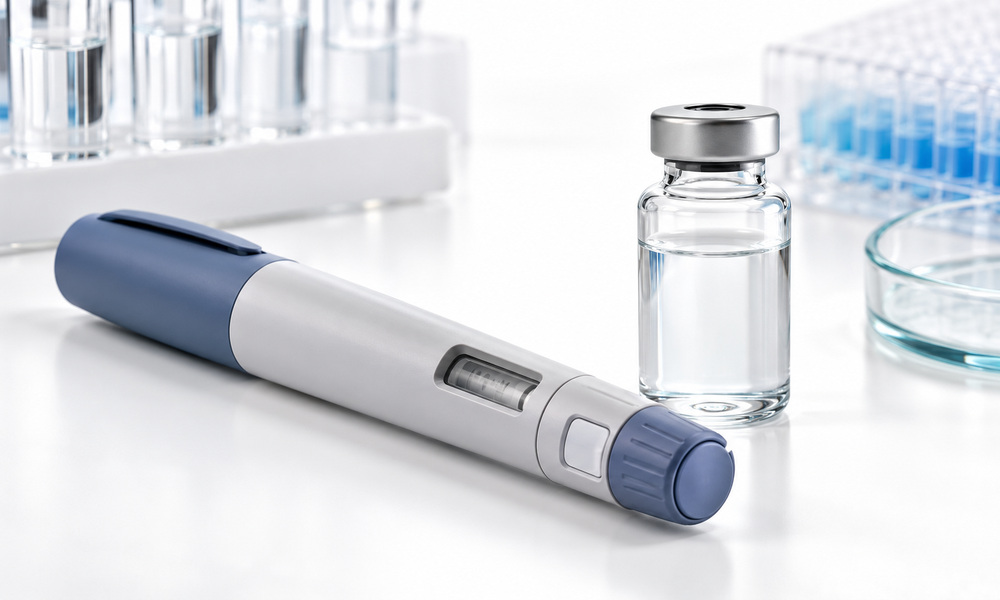
Updated October 2026 • 5 min read • Evidence-led scientific and laboratory visuals
Ozempic is a branded prescription product containing the peptide-based drug semaglutide.
Native GLP-1, semaglutide and Ozempic are related but not synonymous.
Approved drug status does not transfer to an RUO vial that uses familiar marketing language.
Yes. Ozempic contains semaglutide, a peptide-based GLP-1 receptor agonist. The important nuance is that “peptide” describes the molecular class, “semaglutide” identifies the active drug substance, and “Ozempic” is a specific branded prescription medicine with its own approved labeling. These terms belong together in an explanation, but they are not synonyms.
A large part of search confusion comes from people treating every semaglutide listing or every “GLP-1 peptide” label as equivalent to a regulated medicine. That is not a safe or scientifically accurate assumption. The exact product, approval status, manufacturing controls and intended use must be established.
What semaglutide has to do with GLP-1
GLP-1 is a naturally occurring peptide hormone. Semaglutide is an engineered receptor agonist whose molecular design allows longer activity than native GLP-1. It activates the GLP-1 receptor, which participates in glucose-dependent insulin release and several appetite-related signaling pathways. The FDA prescribing information describes what has been authorized for the branded medicine; it does not authorize another material simply because the molecule has a similar name.
For the underlying biology, read What Is GLP-1?. That companion article explains the hormone, the receptor and the distinction between native signaling and pharmacological agonism.
A clear five-term glossary

What Ozempic is—and what it is not
Ozempic is a regulated medicinal product whose current indications and warnings are stated in FDA labeling. Other products containing semaglutide may have different authorized indications, strengths or forms. The FDA label provides authoritative product-specific information, including contraindications and adverse-effect warnings, and remains more reliable than anecdotal social posts.
An unlabeled research vial, a compounded preparation and an approved branded pen may all appear in a search result, but they do not carry the same regulatory assurances. Even if a catalog page uses the word semaglutide, it should not imply that the product is Ozempic.
How semaglutide differs from tirzepatide and retatrutide
Semaglutide is characterized primarily as a GLP-1 receptor agonist. Tirzepatide has activity at GIP and GLP-1 receptors; retatrutide is being investigated for GLP-1, GIP and glucagon receptor agonism. These are distinct compounds, and the maturity of evidence and regulatory position differs. A rigorous comparison should name the receptors and describe the actual study designs rather than rank products by the number of receptor targets.
Our research library includes a focused three-way comparison and an article on why “GLP-3” is an ambiguous commercial expression. Neither should be interpreted as instructions to substitute an investigational material for a prescription medicine.
Why branded drug names should not become generic research keywords
Brand names denote specific authorized products. A molecular name denotes an active substance. A receptor-class term denotes a pharmacological mechanism. Treating all three as interchangeable collapses distinct regulatory and analytical questions. It can also mislead people who expect pharmaceutical manufacturing and clinical oversight from a generic research listing.
On a supplier website, this is a useful line to maintain deliberately: explain the science in the open educational article, then link to the relevant research topic rather than using brand recognition to imply a purchasable therapeutic substitute.

Why the question is important for responsible research marketing
People searching “is Ozempic a peptide” often sit at the boundary of consumer-health curiosity and research-market language. A responsible supplier can answer the molecular question accurately while avoiding the impression that laboratory products are retail therapeutic substitutes. This builds trust and helps AI answer engines extract a clean, defensible factual statement.
From a laboratory purchasing standpoint, the material identity, sequence context, analytical certificate and lot number remain essential. But they must be evaluated as research-procurement attributes; they are not a shortcut to clinical authorization.
Understand molecular identity before procurement
The evidence around approved semaglutide medicines should be kept distinct from the sourcing questions that apply to nonclinical research materials.
For a qualified laboratory, the next meaningful step is to verify the current product identity, packaging, lot-level information and available documentation against its own research requirements.
- Verify the exact compound or components and the intended in vitro/laboratory context.
- Request lot-matched analytical documentation where available; do not substitute a marketing purity badge.
- Retain the listing, batch record and order details for reproducibility and internal review.
Why this matters for a laboratory buyer: the research question and the procurement decision should connect cleanly. A product page should make it easy to verify identity, presentation, current price and available batch information without relying on exaggerated outcome claims.
Before you order: make the product page part of the research record
Open the exact Nerolta listing and compare the compound name, current presentation, supplied form, storage wording, price and any available batch documentation against your laboratory SOP before purchasing.
After purchase, archive the order confirmation, lot identifier and supporting documentation with the experiment record. That creates a cleaner chain from literature review to procurement and makes reorders, troubleshooting and cross-lot comparisons easier.
Understand molecular identity before procurement
Open the relevant Nerolta page to inspect current product details, or consult the research supplier guide before making an institutional purchasing decision.
Compare the scientific guidesReview quality documentation
Frequently asked questions
Is semaglutide a peptide?
Yes. Semaglutide is an engineered peptide-based GLP-1 receptor agonist.
Is Ozempic just another name for GLP-1?
No. GLP-1 is the native hormone and Ozempic is a branded prescription medicine containing semaglutide.
Does a research vial labeled “semaglutide” equal Ozempic?
No. Molecular labeling alone does not make a research material equivalent to an FDA-approved drug product.
Sources and further reading
The scientific and regulatory materials below provide context for the statements in this guide. Research findings are not instructions for human use.
- FDA prescribing information: Ozempic
- FDA: research-use-only disclaimer is not determinative
- Published review of multi-receptor agonists