
Blog
How to Store Research Peptides: Lyophilized Stability, Temperature, Light and Moisture

Updated October 2026 • 6 min read • For qualified laboratory research education
Temperature is only one part of peptide stability; moisture, light, oxygen and handling history can matter.
Lyophilized material and material in solution can have very different stability constraints.
Lot-specific manufacturer documentation should take priority over universal storage rules found online.
“How to store research peptides” is one of the most persistent practical searches in the research-peptide market because storage conditions can determine whether the material tested weeks later is still representative of the material originally characterized. A clean certificate of analysis cannot protect a vial from degradation that occurs after receipt.
The most useful rule is not a universal shelf-life number. It is to preserve the state in which the material was characterized and follow compound- and lot-specific documentation whenever it is available. Sequence, formulation, residual moisture, container closure, excipients and concentration can all change stability.
Why peptides are sensitive to storage conditions
Peptides are chains of amino acids whose chemical and physical stability can be affected by temperature, water activity, oxygen, light, pH, concentration, surfaces and agitation. Depending on sequence and formulation, degradation pathways can include oxidation, deamidation, hydrolysis, aggregation or adsorption to container surfaces.
That is why “keep it cold” is only part of the answer. A vial can be stored in a freezer and still experience problems if it repeatedly warms and cools, if moisture enters the container, if the closure is compromised, or if the material is transferred without traceable records.
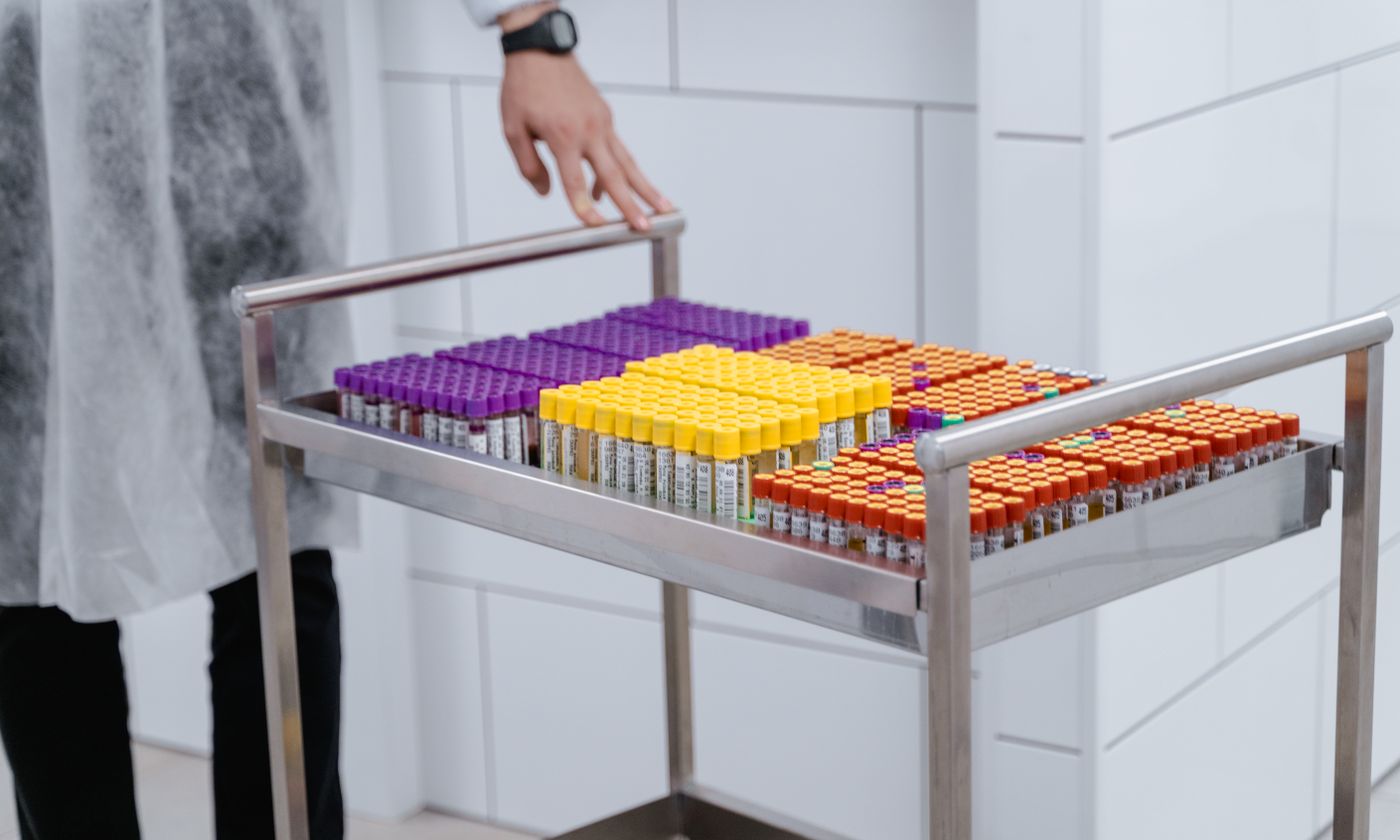
Lyophilized material is dry for a reason
Lyophilization removes most of the water from a frozen formulation under reduced pressure. The resulting dry cake, film or powder generally has lower molecular mobility than an aqueous solution, which can improve storage stability. That is one reason research peptides are commonly supplied in lyophilized form.
Freeze-drying is not magic and does not guarantee unlimited stability. The process itself can introduce stresses, and the final product still depends on formulation quality, residual moisture, packaging and storage history. For a deeper explanation, see What Is a Lyophilized Peptide?.
Four storage variables that matter most
1. Temperature
Lower temperature generally slows many degradation reactions, but the correct range depends on the specific product. Laboratories should follow the supplier’s documented storage condition or a validated internal stability protocol rather than applying one temperature to every peptide.
2. Moisture
Moisture is particularly important for a lyophilized sample because reintroducing water removes one of the major advantages of the dry state. Keep closures intact and avoid unnecessary opening. A cold sealed vial should be allowed to equilibrate before opening when condensation risk is relevant to the laboratory workflow.
3. Light and oxygen
Some amino-acid residues and formulations are more susceptible than others to oxidative or photochemical change. Protecting samples from unnecessary light and repeated air exposure is a simple way to reduce avoidable variables.
4. Temperature cycling and handling history
Repeated movement between cold storage and room conditions adds a variable that may not appear on the original COA. In liquid research stocks, repeated freeze-thaw events can also alter physical stability. Good laboratories record these events instead of assuming the vial remains unchanged.
Why one universal “shelf life” is unreliable
A generic chart that says every peptide lasts the same number of months ignores sequence-specific chemistry and formulation. A peptide containing oxidation-sensitive residues may behave differently from another sequence. A stabilized formulation may behave differently from a neat peptide salt. A low-concentration solution can interact with surfaces differently from a concentrated one.
For reproducibility, the important question is: what storage condition was validated or specified for this exact material, and was that condition maintained?

A practical laboratory storage record
| Record | Why it matters |
|---|---|
| Lot / batch number | Connects the vial to its analytical record |
| Date received | Starts the laboratory custody timeline |
| Storage condition | Documents the environment applied to the sample |
| Open / transfer events | Captures exposure and handling history |
| Observed change | Flags unexpected appearance, closure or stability issues |
Storage does not replace analytical verification
Correct storage preserves a sample; it does not prove what the sample is. Identity and purity remain analytical questions. HPLC can characterize chromatographic purity under a specified method, while mass spectrometry can support molecular identity. See HPLC vs LC-MS for Research Peptides for the distinction.
Likewise, the storage record should stay connected to the lot record. Nerolta’s batch traceability guide explains why a vial, lot number and COA should form one chain of documentation.
Frequently asked laboratory questions
Do all research peptides need the same storage temperature?
No. Sequence, formulation and validated stability data differ. Use product-specific documentation whenever available.
Why can opening a cold vial matter?
Cold surfaces can promote condensation when exposed to humid room air. For dry materials, unintended moisture ingress can change the sample environment.
Does a high HPLC purity value guarantee stability during storage?
No. A purity result describes the tested sample at a particular time under a particular analytical method. Later storage conditions can change the material.
Build storage around documented research material
Browse Nerolta Labs research compounds and review the product-specific information available for each material before defining your laboratory storage record.
Plan storage before the order arrives
Storage is part of procurement, not an afterthought. A laboratory should know where a research material will be received, how it will be logged, which temperature range the supplier specifies for the supplied form and how repeated temperature or moisture exposure will be minimized. Writing that plan before the shipment arrives reduces improvisation and creates a cleaner chain of custody from delivery to experiment.
Because peptide formulations differ, a general article should never override product-specific information. The useful next step is to open the exact Nerolta product being considered and record the storage statement shown for that material. If a detail is unclear, resolve it before ordering rather than filling the gap with a universal rule copied from another peptide.
- Create the inventory entry before receipt so the lot, arrival date and supplied form can be captured immediately.
- Use the storage information for the exact product and form being purchased; do not assume every peptide has the same stability profile.
- Avoid unnecessary handling cycles and document any deviation that could affect later interpretation of an experiment.
Why this matters for a laboratory buyer: the research question and the procurement decision should connect cleanly. A product page should make it easy to verify identity, presentation, current price and available batch information without relying on exaggerated outcome claims. That transparency supports a faster, more defensible sourcing decision.
Before you order: make the product page part of the research record
Open the exact Nerolta listing and compare the compound name, current presentation, supplied form, storage wording, price and any available batch documentation against your laboratory SOP before purchasing. If an older article, cached result or search snippet differs from the live product page, use the live listing for the current commercial offering and the cited scientific literature for research context.
After purchase, archive the order confirmation, lot identifier and supporting documentation with the experiment record. That creates a cleaner chain from literature review to procurement and makes reorders, troubleshooting and cross-lot comparisons easier without turning marketing copy into scientific evidence.
Check product-specific storage information before ordering
Open the research catalog, select the exact material for your project and capture the current product details your laboratory needs for receiving and storage records.
Browse research compoundsRead the lot-traceability guide
References & further reading
- Factors affecting the physical stability (aggregation) of peptide therapeutics — Interface Focus
- Freeze-drying: A flourishing strategy to fabricate stable pharmaceutical and biological products
- Instability of therapeutic proteins — lyophilization stresses and analytical characterization

One thought on “How to Store Research Peptides: Lyophilized Stability, Temperature, Light and Moisture”
Comments are closed.