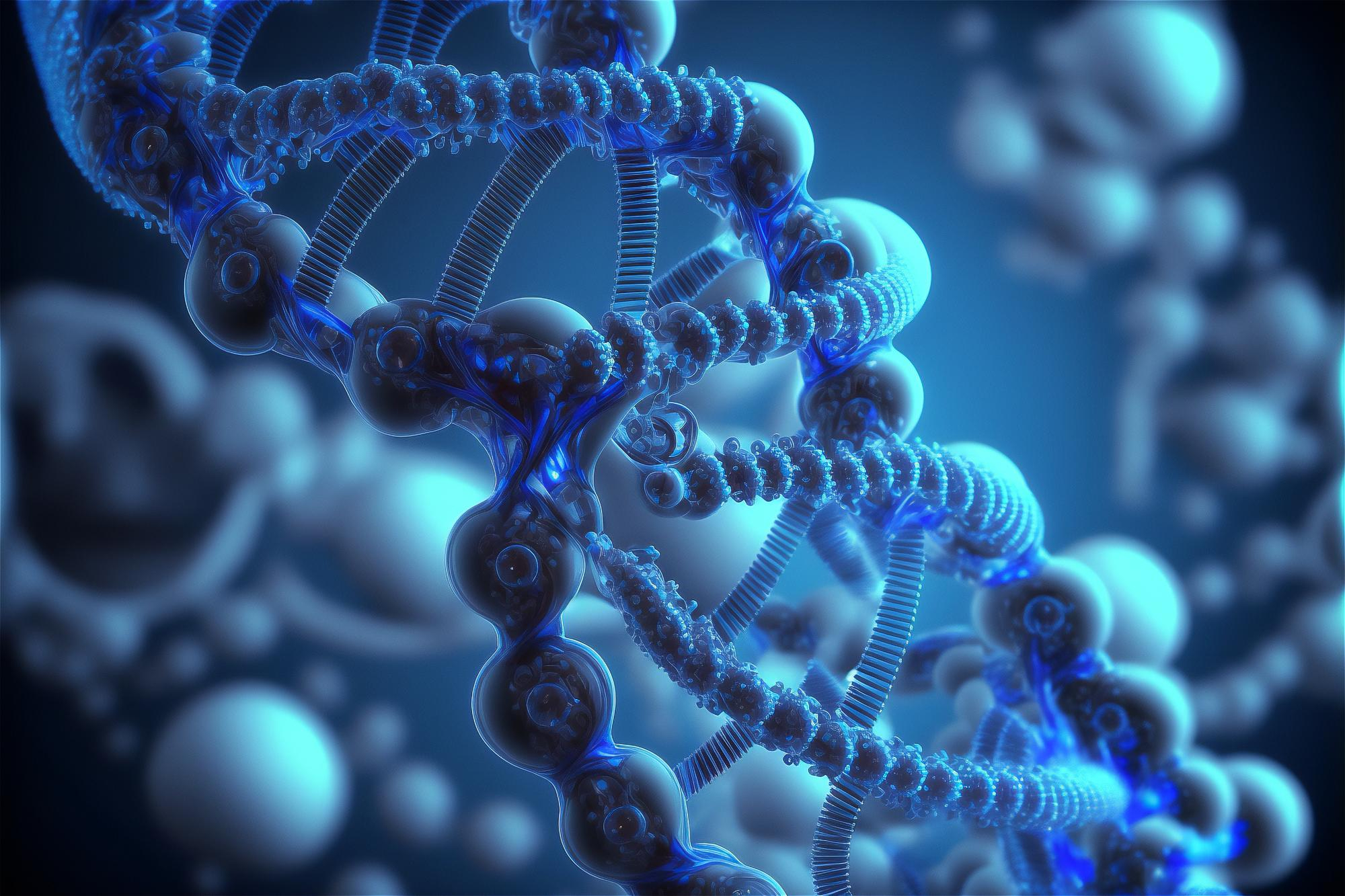
Peptides are short chains of amino acids.
Amino acids are the building blocks of proteins. When a few of them are linked together by peptide bonds, the result is a peptide.
Peptides vs. proteins
There is no exact line between the two. By convention, chains of up to roughly 50 amino acids are called peptides, and longer chains are called proteins. Insulin, with 51 amino acids, sits right at the border and is described both ways.
Why the names look the way they do
Many peptide names are abbreviations or code names, and they tell you something about the compound:
- GHK-Cu is a tripeptide (three amino acids: glycine, histidine, lysine) bound to copper. "Cu" is the chemical symbol for copper.
- KPV is named after its three amino acids: lysine, proline and valine.
- BPC-157 is a synthetic peptide of 15 amino acids.
- MOTS-c is a 16-amino-acid peptide encoded in mitochondrial DNA. The name stands for "mitochondrial open reading frame of the 12S rRNA type-c."
- TB-500 is commonly described as a synthetic fragment of thymosin beta-4.