Blog
What Is the Wolverine Peptide? BPC-157 and TB-500 Explained

Updated October 2026 • 6 min read • Evidence-led scientific and laboratory visuals
Wolverine peptide usually means a BPC-157/TB-500 pairing, not one molecule.
TB-500 naming requires identity checks against the material actually sold.
A blend does not inherit proven synergy from studies of its separate components.
The “Wolverine peptide” is not one formally defined peptide. In online peptide discussions, the name usually points to a combination of BPC-157 and TB-500. The nickname borrows a popular idea of rapid regeneration, but the commercial language should not be mistaken for a verified biological property. A product can use that name while differing in composition, quantity or documentation from another listing.
This is a particularly valuable search topic because people often arrive believing that “Wolverine” names a new molecule. The first task is to correct the definition; the second is to examine the research on each component and explain what is missing for the combined product.
What compounds are typically meant by Wolverine?
Names such as TB-500 can themselves be ambiguous in commercial materials, and descriptions do not always establish whether a product corresponds to full-length thymosin beta-4 or a particular fragment. The component identity should therefore be verified directly against the listing and documentation.
What the BPC-157 evidence contributes
BPC-157 has appeared in numerous preclinical investigations involving tissue responses and injury-related models. Some studies report favorable laboratory or animal outcomes, but human clinical evidence remains limited and cannot support a reliable treatment claim. Our dedicated BPC-157 guide discusses this evidence and the translational barriers in greater detail.
An experiment showing a change in a histological marker or animal functional measure supports a hypothesis under that study’s conditions. It does not demonstrate that a two-component commercial blend has a real-world human recovery effect.

TB-500, thymosin beta-4 and naming precision
Thymosin beta-4 is a naturally occurring peptide studied for roles in cellular dynamics, migration and tissue organization. TB-500 is frequently used as a related product name, but the exact chemical identity should not be presumed from colloquial online usage. When scientific evidence is cited, the reader needs to know which molecule the original study tested.
This distinction becomes especially important in blended products. A research paper on one sequence cannot be used as proof of a different marketed preparation without careful identity confirmation.
Why mixing two peptides does not establish synergy
Synergy is an experimental conclusion, not something that follows from using two ingredients. Properly designed combination studies would need controls for each individual peptide, the combination and the relevant model endpoints, plus statistical analysis of interaction. Without such evidence, claims that a blend is “twice as effective” are speculation.
A qualified laboratory may study mixtures, but it should document each component and the blend composition. The value of a reproducible experiment depends on knowing what was actually tested.
The documentation problem unique to two-component products
A single total mass figure does not tell a researcher how much of each named component is present. A blend certificate also needs an analytical approach capable of distinguishing the constituents or explaining its measurement limitations. This can be more difficult than confirming one isolated analyte and should not be hidden behind an attractive combined label.
For a study designed around combined activity, independent-component controls are critical. Without them, an experimental change cannot be attributed confidently to BPC-157, TB-500 or their interaction. The product name may help people find the subject, but the study record must use precise component language.
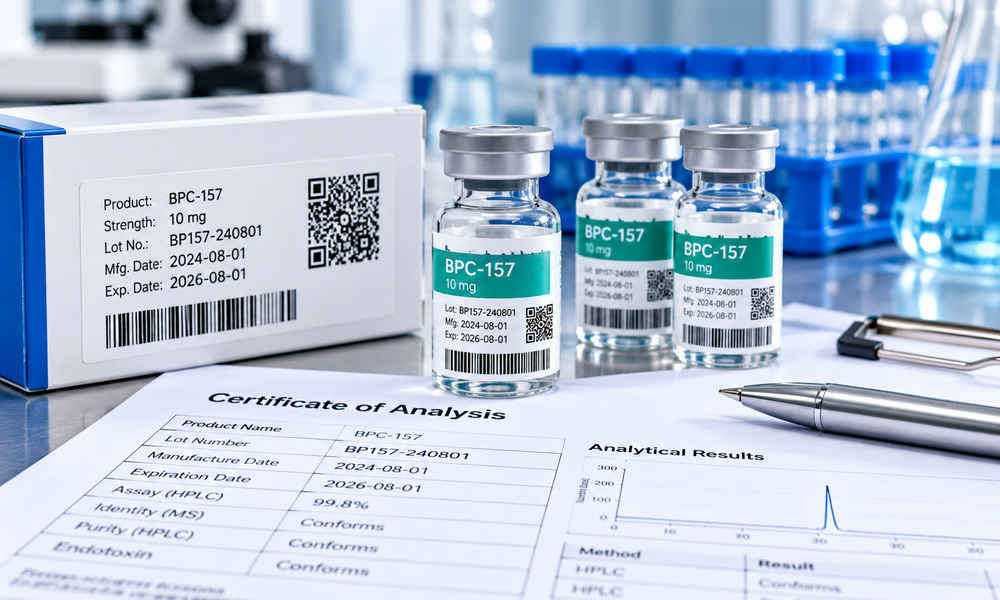
What to verify before reviewing a Wolverine-labeled listing
- Component identity: are BPC-157 and the specific TB-500-related material identified?
- Defined presentation: is the total blend quantity distinguished from per-component information?
- Lot traceability: can the delivered item be tied to a matching record?
- Analytical scope: what tests, if any, address each component or the full mixture?
- Claims discipline: is the product positioned for in vitro research rather than recovery treatment?
Nerolta currently advertises a BPC-157 / TB-500 blend in its catalog. That live listing is the correct place to inspect the company’s actual offered presentation. An article about the Wolverine nickname should inform the reader and connect to the relevant product without pretending that the nickname itself guarantees a specified formula.
Where this topic fits into an evidence-based research library
The “Wolverine” search cluster works best as a commercial terminology bridge. Readers can continue to the BPC-157 vs TB-500 comparison for compound-level distinctions, to the supplier guide for purchasing criteria and to the original research reviews for evidence limitations. These links help an interested visitor move from viral terminology to a specific, documentable laboratory decision.
Evaluate the actual blend—not the nickname
The useful commercial next step is a precise blend listing with documented components, not a dramatic claim about tissue recovery.
For a qualified laboratory, the next meaningful step is to verify the current product identity, packaging, lot-level information and available documentation against its own research requirements.
- Verify the exact compound or components and the intended in vitro/laboratory context.
- Request lot-matched analytical documentation where available; do not substitute a marketing purity badge.
- Retain the listing, batch record and order details for reproducibility and internal review.
Why this matters for a laboratory buyer: the research question and the procurement decision should connect cleanly. A product page should make it easy to verify identity, presentation, current price and available batch information without relying on exaggerated outcome claims.
Before you order: make the product page part of the research record
Open the exact Nerolta listing and compare the compound name, current presentation, supplied form, storage wording, price and any available batch documentation against your laboratory SOP before purchasing.
After purchase, archive the order confirmation, lot identifier and supporting documentation with the experiment record. That creates a cleaner chain from literature review to procurement and makes reorders, troubleshooting and cross-lot comparisons easier.
Evaluate the actual blend—not the nickname
Open the relevant Nerolta page to inspect current product details, or consult the research supplier guide before making an institutional purchasing decision.
Examine the BPC-157/TB-500 blendRead the supplier guide
Frequently asked questions
What is in the Wolverine peptide?
The nickname most commonly refers to BPC-157 and TB-500 together, but composition should be verified for each product.
Is Wolverine a medically approved peptide treatment?
No. A marketing nickname does not denote an FDA-approved therapy.
Does BPC-157 plus TB-500 have proven synergy?
A combination claim requires direct evidence from well-designed combination studies; separate preclinical findings do not establish synergy.
Sources and further reading
The scientific and regulatory materials below provide context for the statements in this guide. Research findings are not instructions for human use.
- Review of BPC-157 and TB-500-related evidence
- BPC-157 translational review
- FDA 2026 advisory meeting including TB-500-related substances