Blog
What Are Copper Peptides? GHK-Cu, Skin Research and Evidence

Updated October 2026 • 6 min read • Evidence-led scientific and laboratory visuals
Copper peptides are peptide–copper complexes; GHK-Cu is a widely studied example.
Skin-related preclinical findings and tested topical formulations are not interchangeable with RUO material.
Good purchasing decisions depend on chemical form, formulation and lot-specific evidence.
Copper peptides are peptides that bind copper ions. In skincare and peptide-research discussions, the most frequently mentioned example is GHK-Cu: the copper complex of the tripeptide glycyl-L-histidyl-L-lysine. The copper-binding chemistry is real, but claims about skin rejuvenation, hair growth or healing need to be evaluated against the precise experimental evidence.
This article addresses the broad consumer-information query “what are copper peptides” without turning a laboratory supplier’s site into a treatment promotion. Readers looking specifically for GHK-Cu can continue to our existing GHK-Cu compound guide, which focuses on the molecule and analytical identity.
What GHK-Cu is at the molecular level
GHK is the tripeptide glycine–histidine–lysine. When it complexes with copper, it is commonly written GHK-Cu. Complexation affects the compound’s chemistry and can influence interactions in experimental systems. The terms GHK, GHK-Cu and “copper peptide” should not be assumed interchangeable in a research report.
Scientists investigating peptide-metal complexes must distinguish the peptide itself, the metal-bound form and the formulation in which the material is delivered. This becomes especially relevant in topical or model-membrane experiments, where bioavailability and stability depend on more than the molecule’s name.
Why copper peptides appear in skin-research literature
The skin contains extracellular matrix proteins and complex cellular systems responsible for maintenance and repair. Studies involving GHK and GHK-Cu have examined processes such as collagen-related gene expression, fibroblast responses, matrix remodeling and signaling relevant to tissue organization. Some studies investigate delivery strategies that help a peptide reach an experimental target.
These are meaningful mechanistic findings, but a cell-culture readout does not automatically predict wrinkle reduction in a clinical population. Reviews consistently highlight the need for better-designed human studies and well-characterized formulations.
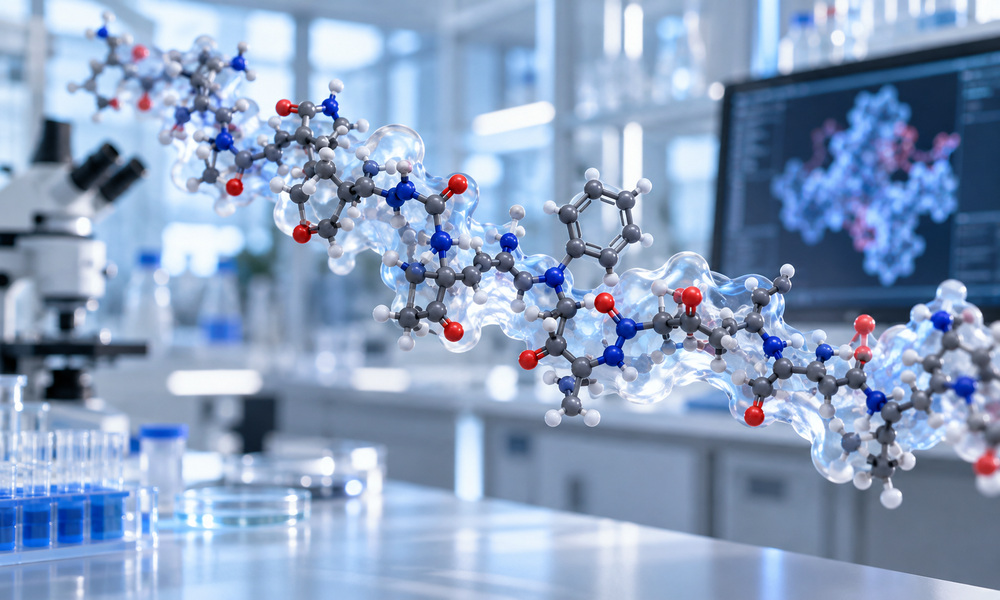
Copper peptide vs collagen peptide: related words, different material
A page about collagen peptides should not simply be merged into a GHK-Cu product page: the molecular categories, search audiences and evidence base are different. This distinction also helps avoid SEO cannibalization while keeping a clear scientific structure.
What clinical and preclinical data can support
A 2025 review of topically applied GHK emphasized promising cellular findings alongside gaps in permeability and human clinical evidence. A more recent synthesis also described promising preclinical work and a limited set of clinical studies, while noting variability in study quality and formulation. The correct conclusion is that the area is active and scientifically interesting—not that every copper peptide product produces the same skin outcome.
Clinical evidence must be matched to a tested preparation. A result from a formulated cosmetic containing GHK-Cu does not establish performance of an unrelated laboratory reagent or a multi-peptide blend. This is a crucial boundary for a research-only supplier.
Why formulation and skin penetration matter
Peptide molecules do not all pass easily through the outer skin barrier. Formulation systems, metal binding, carrier technology and stability can change experimental exposure. A paper reporting cellular activity after direct application to cultured cells may not address whether the same molecule can reach those cells from the surface of intact skin.
Research teams should therefore ask: which preparation was used, how was exposure measured, and did the model reproduce relevant features of the barrier? A credible article addresses these questions instead of repeating the phrase “boosts collagen” without context.
Copper binding, delivery and test-system design
A copper complex may behave differently in a buffer, formulated topical product or cell-culture medium. Other ligands in the environment can affect chemical speciation, and model membranes can differ greatly from living skin. For experiments intended to compare formulations, that makes the control preparation and analytical conditions essential details, not incidental methods.
An informative result should identify which copper-peptide species was used, what delivery system was tested and whether the endpoint came from cultured cells, an artificial barrier or a clinical study. This evidence hierarchy prevents readers from mistaking a promising mechanism for universal cosmetic effectiveness.
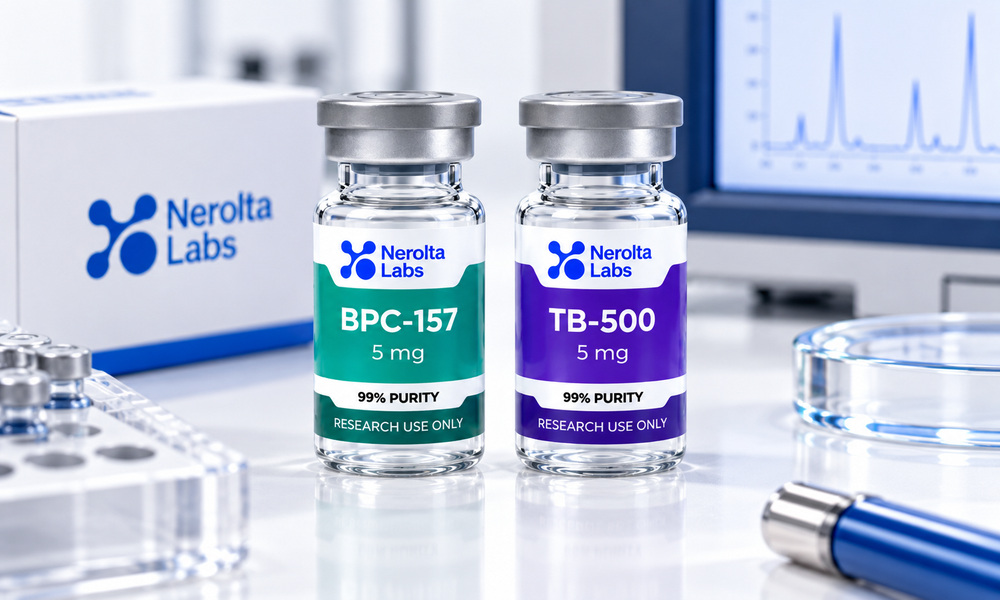
What a qualified laboratory should confirm when sourcing GHK-Cu
- Is the material GHK, GHK-Cu or a mixture with other peptides?
- Does the documentation identify the bound or unbound species appropriately?
- Does the proposed assay match the compound and test matrix?
- Is analytical evidence attached to the actual lot?
- Are storage and formulation details appropriate for the experimental plan?
Nerolta’s catalog includes GHK-Cu-related products and a GHK-Cu / TB-500 / BPC-157 combination. Because products may vary, the live listing—not a broad educational article—should supply the definitive description of what is being offered. See also our blend evaluation guide if multiple compounds are involved.
Why the broader search term matters to Nerolta
“What are copper peptides” introduces a much wider audience than a technical GHK-Cu guide. Good content should answer the basic question plainly, distinguish the underlying molecular forms, discuss the research evidence and then point motivated laboratory readers toward verifiable product information. This creates a natural discovery path without making unwarranted skin-treatment promises.
Follow the chemistry to the actual product
GHK-Cu education creates value when readers can distinguish pure compounds from complexed forms, blends and unrelated cosmetic formulations.
For a qualified laboratory, the next meaningful step is to verify the current product identity, packaging, lot-level information and available documentation against its own research requirements.
- Verify the exact compound or components and the intended in vitro/laboratory context.
- Request lot-matched analytical documentation where available; do not substitute a marketing purity badge.
- Retain the listing, batch record and order details for reproducibility and internal review.
Why this matters for a laboratory buyer: the research question and the procurement decision should connect cleanly. A product page should make it easy to verify identity, presentation, current price and available batch information without relying on exaggerated outcome claims.
Before you order: make the product page part of the research record
Open the exact Nerolta listing and compare the compound name, current presentation, supplied form, storage wording, price and any available batch documentation against your laboratory SOP before purchasing.
After purchase, archive the order confirmation, lot identifier and supporting documentation with the experiment record. That creates a cleaner chain from literature review to procurement and makes reorders, troubleshooting and cross-lot comparisons easier.
Follow the chemistry to the actual product
Open the relevant Nerolta page to inspect current product details, or consult the research supplier guide before making an institutional purchasing decision.
Explore GHK-Cu research materialRead the supplier guide
Frequently asked questions
Are GHK-Cu and copper peptides exactly the same thing?
GHK-Cu is a major example of a copper peptide, but the broader category can include other copper-binding peptides.
Do copper peptides have proven anti-aging effects?
Some studies are encouraging, but results depend on the formulation and study quality; broad claims across all copper peptide products are not justified.
Is GHK-Cu in a research catalog the same as a cosmetic serum?
No. A laboratory material, a finished cosmetic formula and a clinical intervention have different contexts and evidence requirements.
Sources and further reading
The scientific and regulatory materials below provide context for the statements in this guide. Research findings are not instructions for human use.
- Topically applied GHK: advantages and limits
- GHK-Cu regenerative evidence synthesis
- GHK skin-pathway review